Gardening Chingford: Recycling and Sustainability for Greener Gardens
 Gardening Chingford is committed to an eco-friendly waste disposal area approach that protects local green spaces while helping residents create a sustainable rubbish gardening area at home. Our philosophy blends practical garden waste management with wider recycling and sustainability goals, working within the borough's waste separation systems and municipal collection schedules. We aim to make it simple for householders and community gardeners to sort, reuse and divert garden materials from landfill.
Our local action plan sets a clear recycling percentage target to track progress: a borough-level goal of 65% recycling of organic and recyclable materials from gardening and household waste by 2030, with an interim target of 50% by 2026. These targets align with London-wide ambitions and reflect the practical steps we encourage such as composting, mulching, and wood recycling. By aiming high, Gardening Chingford helps drive behaviour change toward a truly sustainable rubbish gardening area across the neighbourhoods we serve.
 We coordinate with Waltham Forest's approach to waste separation and nearby borough schemes, recognising local rules on paper, glass, plastics and organics. Light-touch adjustments in garden practice — for example, separating green waste from contaminated bags, keeping soil free of plastic, and using labelled containers — dramatically increase the proportion of material that can be sent to recycling streams rather than landfill. Our educational materials and on-site sorting advice reflect these borough guidelines to keep the process straightforward for every gardener.
Practical Infrastructure: Transfer Stations and Low-Carbon Logistics
To move material efficiently from garden to resource, Gardening Chingford works with local transfer stations and processing sites. We make regular use of nearby facilities such as Edmonton EcoPark and other authorised transfer stations in north-east London to ensure green waste and wood are processed into compost, mulch and recovered biomass. Routing via licensed transfer stations supports traceability, reduces illegal tipping and ensures compliance with borough and London Waste Regulation policies.
- Local transfer stations – authorized sites for sorting and onward processing
- Material routing – green waste, untreated wood and bulk soil are separated
- Resource recovery – composting, chipping, biomass recovery
 Our fleet strategy for the eco-friendly waste disposal area emphasises low-carbon vans: a mix of electric models, plug-in hybrids and Euro 6 diesel where appropriate. These vehicles reduce emissions during collection and transport and are scheduled to minimise empty mileage. By investing in greener transport we lower the carbon footprint of every skipped collection and aggregated garden load, keeping Gardening Chingford consistent with local air quality priorities.
Community Partnerships, Reuse and Circular Gardening
Gardening Chingford also develops partnerships with local charities and reuse organisations to extend the life of garden materials. We work with community groups, The Conservation Volunteers (TCV) projects, community allotments and local reuse charities to donate usable timber, planters and surplus topsoil. These collaborations mean that well-maintained materials are repurposed within the community instead of being treated as waste, supporting a circular approach to sustainable rubbish gardening area management.
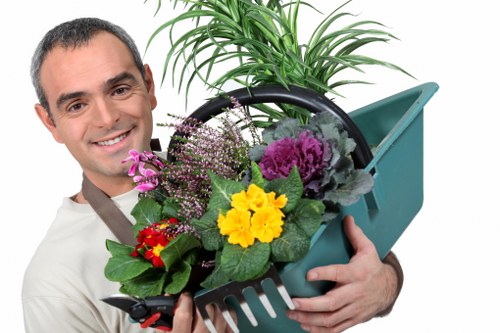 On the ground, practical recycling activities include seasonal bulky green waste collections, community chipper days for branches to become mulch, and organised soil swapping sessions. We encourage householders to adopt home composting or use communal bins for clean green waste, and we advise separating invasive plants and contaminated materials so the transfer station can process the remainder effectively. Small changes at the garden level add up to significant improvements in borough recycling rates.
 Monitoring and transparency are central: Gardening Chingford tracks volumes of green waste diverted, tonnes of wood chipped, and the number of households adopting low-waste garden methods. We report progress against the recycling percentage target and publish summaries of volumes handled via local transfer stations and charity partners. This evidence-based route helps demonstrate how an eco-friendly waste disposal area and a well-managed sustainable rubbish gardening area can coexist with thriving urban green spaces.
To achieve these goals we combine practical services with behaviour change: scheduled low-emission pick-ups, clear advice on the borough’s waste separation, community reuse routes and support for composting systems. The result is a resilient, localised recycling ecosystem tailored for Gardening Chingford — one that reduces emissions, recovers resources and builds greener, healthier gardens for all.
Our emphasis on sustainable rubbish gardening area solutions covers both householders and communal sites. From mulching and on-site composting to routing bulky green waste via licensed transfer stations, each step is designed to keep materials circulating and carbon impact low. The combination of targets, partnerships and low-carbon vans creates measurable progress toward long-term sustainability objectives.
By integrating borough waste separation rules, collaborating with charities and community projects, and using greener vehicles, Gardening Chingford offers a pragmatic path to an eco-friendly waste disposal area that supports local biodiversity, reduces landfill and helps meet our shared recycling goals.